Yea or Nay: Otherwise titled Insta-love and Why I Think It's a BIG NO-NO
 |
| Only when it's you, Ryan Gosling. |
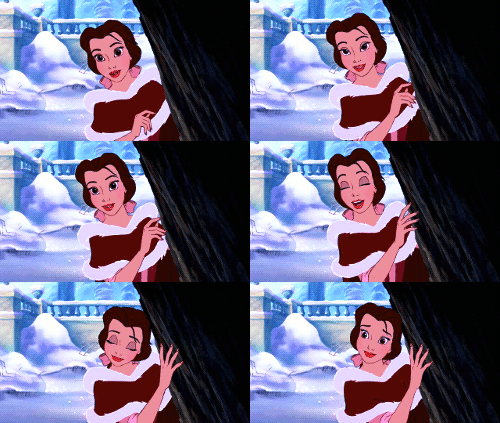
When I see insta-love approaching, I usually react like this:
 Insta-love
, for those blissfully unaware, is when two characters fall in love pretty much at first sight or soon after. There is no history between them and hardly any basis for their feelings beside mutual attraction. It's usually accompanied by many fervent declarations of everlasting love and a lot of mooning.
I've said it before and I'll say it again: I love romance.
Love it. There's almost nothing more wonderful to me as a reader than watching two characters slowly and realistically come together.
See the key words there?
Slowly and realistically.
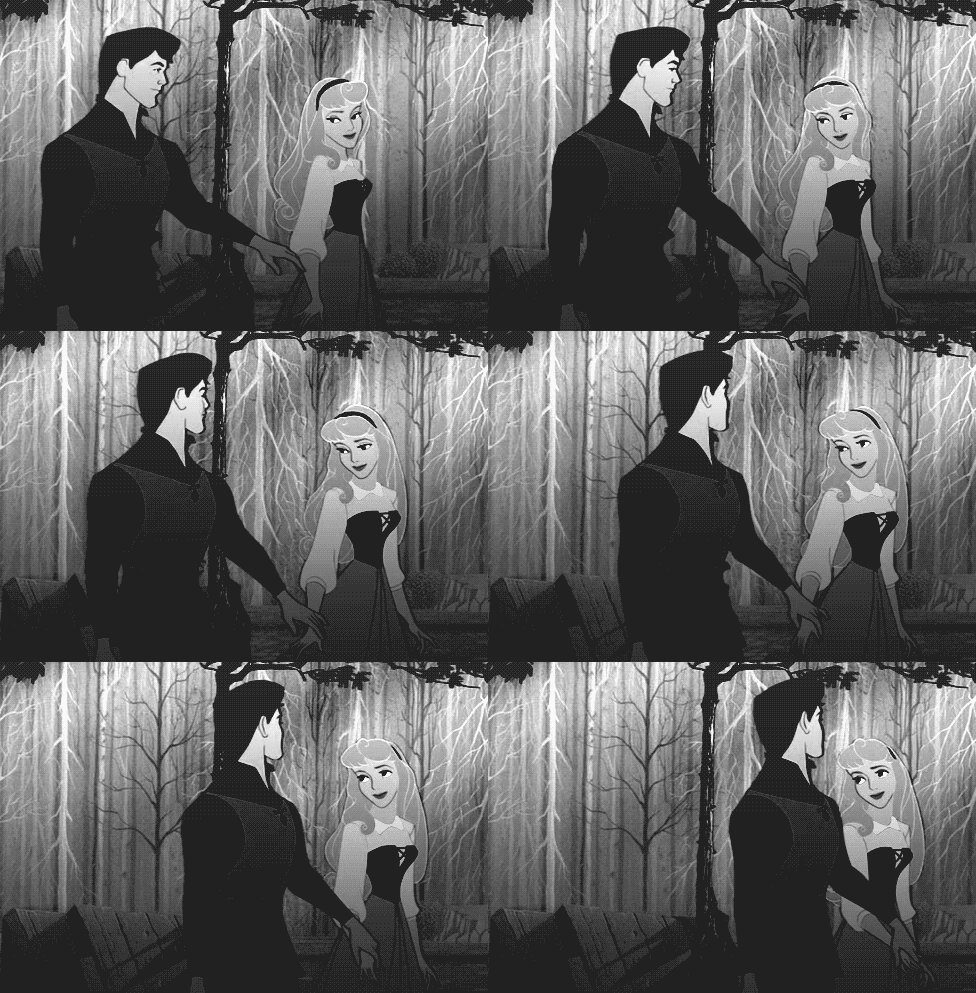
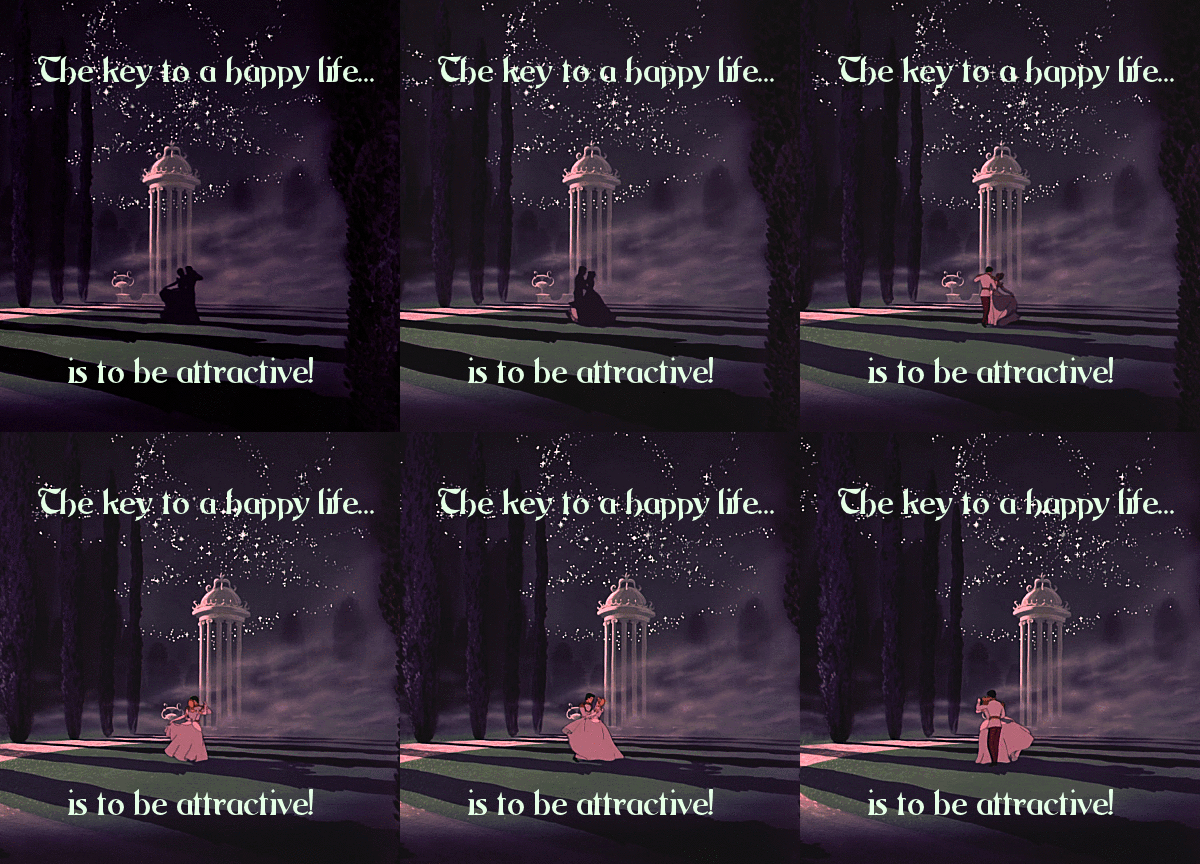
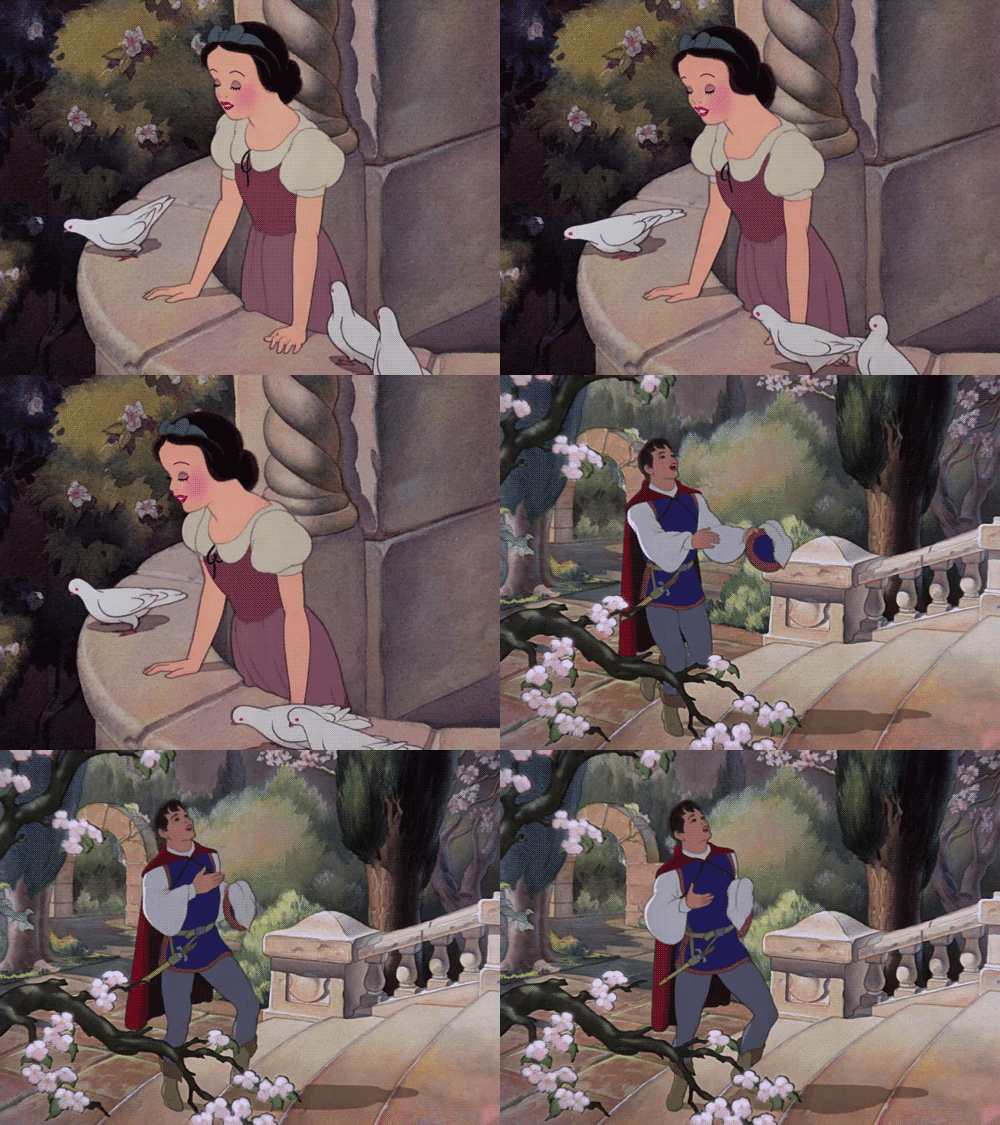
Romeo and Juliet is the most famous and most classical example of insta-love in literature. Nearly every romantic fairy tale and their accompanying Disney adaptation includes insta-love. Snow White and Prince Boring meeting by the wishing well. Aurora and Prince Philip the Sexy dancing in the forest. Cinderella and Prince Epaulets waltzing about the palace gardens.
If we don't see
how they fell in love, then we'll never understand
why they are in love. Just because an author claims something on the page doesn't mean we're going to believe it. And when it comes to romance of any sort, readers are quick to put on their skeptical pants. They give it a good once-over before buying into it. What I'm saying is, the love has got to be "real". Or else we react thusly:
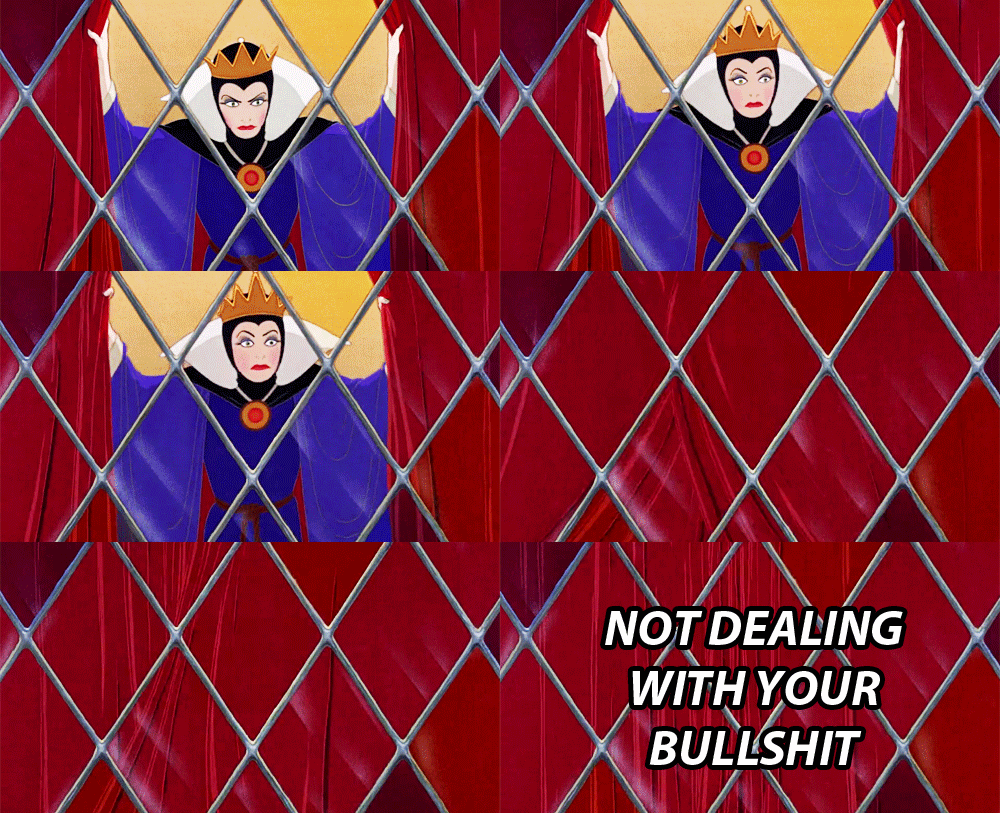 |
| All she REALLY wanted was for Snow and Prince Charming to stop singing at each other. |
Insta-love vs. Insta-attraction
BIG difference. Insta-attraction happens all the time in real life and in novels. Let's say you're reading about a main character named, um, Julie. Julie is standing in line at Starbucks when someone accidentally bumps into her from behind. She turns to yell at this monumentally stupid person and
whoa. Lo and behold, behind her stands a tall, rumpled, sexy dude with gorgeous blue eyes and a devastating crooked smile. The fat paperback tucked under his arm is the same book that's in Julie's purse. Julie's whole body lights on fire and her heart flips over and she forgets how to form sentences. It's like being struck by lightning.
That could be a wonderful start to a love story. I don't need for the two main characters to instantly hate each other, Beatrice and Benedick style (though it's super fun when they do). But as long as these people don't
instantly decide they love each other, then it's okay. I mean, what if he's secretly a spy? An assassin? Engaged to her nemesis? Gay? Taken a vow of celibacy? Royalty? Any kind of complication or obstacle will do.
Let's say Julie and the blue-eyed, coffee-drinking sexpot (let's call him Jim) decide to sit down and have their coffees together. They have a lot in common and their chemistry is pretty much off the charts. Julie can react in several ways. She can think
Oh my giddy aunt, Jim is amazing. I could totally see myself falling in love with him someday. Maybe I should ask him out. Or she can think
Oh my giddy aunt, I'm already desperately in love with him. If a crazy wizard came in here and started Avada Kedavra-ing everybody, I would jump in front of him and die in his place. Because love.

You should know by now which option I prefer.
"But Gillian!" you and Julie cry, tears leaking down your precious, naive faces. "Jim's amazing! It could happen! My parents fell in love that way! My best friend's cousin's college roommate met her husband in a coffee shop and they got married the next day and are still together and have forty seven babies and a dog!"

But I will shake my head condescendingly and say, "That's lovely, my dears, but it is exceptionally boring. Real life is not fiction, and fiction is not real life. I don't want to read about your best friend's cousin's college roommate. I want to read about two souls growing together through trials and tribulations. I want to read about the hard stuff, the messy stuff, and the exciting stuff. Because that's the fun of romance."
Love is such an amorphous, individual thing that it's hard to say what's love and what isn't. I mean, what's the difference between love and infatuation? Time? Seeing past your original idealized version of a person? I don't know. It'll vary for every story. But basically, I want my book life to be
better than real life. It has to be
more believable than real life, because, guess what? Someone is making it up. Fiction has to be more believable than fact, so the reader is tricked into forgetting it's fiction. It's a hard thing to pull off, but hey. That's why they pay authors the
big imaginary bucks.

The absolutely worst part of instalove to me is how much these characters
insist on verbalizing their twue wuv. When characters get all, "Blahh, my sweet, my turtle dove, I love you more than everything in the history of the universe and I'm in physical pain because we are not currently touching" after knowing each other a week, I roll my eyes and seriously consider throwing them both into a vat of boiling tar.

Seriously? You have a
family. Friends. Pets. You care about Hottie McBlue Eyes more than your
family? After one week? This is not romantic to me. This is pathetic.

I want the characters' love to be communicated through their actions, not their sappy words. Words can lie. Words can be fake. Actions? Not so much. I also need to be able to see what the two characters see in each other. Do they possess qualities that the other lacks, like Darcy and Elizabeth or Ron and Hermione, balancing and rounding each other out? Is the hero or heroine the first person to truly see and value something about the main character, the way Four always believes in Tris' capabilities? I want to see why these puzzle pieces fit together. I don't want the author to just tell me they do.
 |
| Logan knows a true love story when he sees one. |
Of course, there are books where insta-love is done well-ish (cannot actually think of any right now, but I'm certain they exist), but I always feel like those are
only pulled off by people who understand the trope and are working with it. I've never read
The Statistical Probability of Love at First Sight, but I've heard that this is one of them. Obviously I could be wrong, since I haven't read it. But there. I named a book. My work here is done.
It's not the shortened timeframe of an insta-love romance that bothers me so much as the lack of build-up. If a
lot of things happen in a book over a couple of days, a week, or a month, the author could possibly convince me with a love story. But things
need to happen between the two characters. They can't just be attracted to each other, have a couple heart-fluttery conversations together, vaguely ponder a mystery of some sort, and then declare themselves. Those are often the characters who feel the need to inform each other every ten pages or so that they are desperately in love, like they're worried the reader has forgotten. "I love you," the hero will say, earnestly and with one manly tear glittering on his cheek (TM Dean Winchester), "more than my own flesh, more than the sun and stars," and the reader will say, "
Yes, thank you, I've got it, you just said that, can we please move on with the plot?"

Brilliant YA author (and creator of one of my favorite love stories of all time)
Veronica Roth has this to say on the matter:
Most of the time, for me, the problem is "You're Hot, So I Love You."
That is: the only in-text justification for the intense feelings of the
characters is their physical attraction. We get many paragraphs
dedicated to description, but none devoted to conversation or
experiences that transcend the physical. Maybe the author even tells us something like "they talked for hours about this and this and this," but we don't get to see any of it, so we remain unconvinced.
I love that. That's so perfect and exactly sums up what I'm trying to say. Because she's Veronica Roth, obviously she does it much more cleanly and succinctly and awesomely. We bloggers like to rail on about show vs. tell, particularly when it comes to romance. I want to
see them fall in love with what's in the other person's heart. It's not the same if the characters and the author just tell me that they already have.
 |
| Day One: Meet. Day Two: MARRIAGE! |
(Yes, I know technically Derek and Odette weren't insta-love, as they knew each other their whole lives. Although they did change their minds
awfully fast. And those of you who don't know what I'm even talking about
, shame on you. This movie is a classic.)
Ms. Roth also warns readers not to brace against insta-love at all times:
And for readers, of which I am one: it's not that I think we
should stop evaluating love stories for their believability. But I do
think that it's important to make an effort to experience a story
alongside the main character, rather than standing over the main
character with our experiences or beliefs in hand like some kind of
anti-insta!love weapon. And if, after we put the weapon down, we still
read something and say "this is insta!love and it's annoying," I say,
fair enough. Even if you say it about my books. I promise.
First of all, I just love that she calls it "insta!love", like it's some kind of infomercial product you can buy for $19.99. Like it's a little magic potion that you can throw in someone's eyes
A Midsummer Night's Dream-style and
poof! The man of your dreams has been smitten by
Insta!love! Act now and we'll throw in a free ShamWow!
Anyway, every word she said is true. If you don't believe the love story
on its own merits, then the story failed. We shouldn't immediately dismiss a love story because it has insta-attraction or a shorted time frame, because that doesn't fit in with our real-life experiences of love (HAHAHA, as if I have real life experiences of love). But if the romance feels shallow, unbelievable, too fast, or if it skipped a lot of important steps, then by all means, brand it insta-love and dismiss it if you feel so inclined.

Since this is, technically, a "yea or nay" post, you're at perfect liberty to disagree with me. So what say you?
Instalove: Yea or nay?
For reference, here's a Goodreads list of Popular Insta Love Books.









 Posts
Posts

